OpenArt: Image-to-video scene creation with Wan 2.6

 OpenArt
Demo summary
The user demonstrates animating a retro-futuristic diner image by adding a UFO fly-by using Wan 2.6.
Step-by-step
- Upload an image to the Image-to-Video tool
- Set the generation settings to the highest quality
- Select 'Single' for the shot type
- Enter a prompt describing the specific action, such as a UFO flying by a window
- Click Create
Options
- Use multi-shot video mode
- Include shot change instructions directly inside the text prompt
Watch out for
- Wan 2.6 can be picky when performing multi-shot videos with images
Tips
- Use single shot type for better reliability when animating specific images
Highlights
“it actually looks really good”
All demos from “Best AI Video Generators in 2026 (Most Realistic)”
- 0:500:50Generate realistic video with Sora 2The creator demonstrates using Sora 2 within the OpenArt interface to generate a high-resolution, 12-second video from a complex text prompt.OpenArt· Text to Video
- 2:150:16Create vlog-style content with Sora 2A demonstration of Sora 2 generating a realistic 'vlog style' video of a winter day in New York City, showcasing environmental interpretation.OpenArt· Text to Video
- 2:520:35Image-to-video product ad with Sora 2The user uploads a static image of headphones and uses Sora 2 to generate a UGC-style video ad with a person demonstrating the product.OpenArt· AI UGC Video Generator
- 4:270:18Text-to-video generation with Kling 2.6The video shows the selection of the Kling 2.6 model in OpenArt to generate a video with saturated colors and integrated audio.OpenArt· Text to Video
- 5:090:23Simulate cockpit environment with Kling 2.6A demonstration of Kling 2.6 generating a stylized video of a pilot in a thunderstorm, focusing on environmental effects and audio sync.OpenArt· Text to Video
- 5:460:18Animate static portraits with Kling 2.6The creator uses an image of a grandmother with cookies as a base for Kling 2.6 to animate a winking smile and camera interaction.OpenArt· Image to Video
- 7:170:28Multi-shot camera control with Wan 2.6Demonstration of the multi-shot prompting feature in Wan 2.6, allowing for distinct camera angle changes within a single AI generation.OpenArt· AI Video Generator
- 8:070:40Image-to-video scene creation with Wan 2.6CurrentThe user demonstrates animating a retro-futuristic diner image by adding a UFO fly-by using Wan 2.6.OpenArt· Image to Video
- 10:320:31Complex motion tracking with SeaDance 1.5 ProThe creator shows how SeaDance 1.5 Pro handles complex martial arts movements using skeletal tracking to maintain limb consistency.OpenArt· AI Animation Generator
- 11:270:31Start-to-end frame interpolation with SeaDance 1.5 ProA demonstration of providing both a starting and ending image to SeaDance 1.5 Pro to control a specific dance sequence.OpenArt· Image to Video
- 12:350:39Cinematic generation with Google Veo 3.1The user demonstrates Google Veo 3.1's 'Normal' high-quality mode to generate a cinematic scene with realistic audio.Google AI Studio· Text to Video
- 13:380:25Dolly shot camera instructions in Google Veo 3.1A demonstration of using specific camera movement keywords like 'wide angle dolly in' to control the output of Google Veo 3.1.Google Vids· Text to Video
- 14:230:36Room transition generation with Google Veo 3.1The creator uses a messy office start frame and a clean studio end frame to have Google Veo 3.1 generate a smooth room transformation transition.OpenArt· Image to Video
- Watch “Best AI Video Generators in 2026 (Most Realistic)” →

Image to Video
 9:300:40Animate scenes with Kling 2.6The creator demonstrates animating a static image into a 5-second video clip of characters walking using the Kling 2.6 model within the Open Art interface.Youri van Hofwegen
 2:300:40Animate images using Kling 2.6 in OpenArtThe demonstration shows uploading a static image and using the Kling 2.6 model to generate a realistic video of a girl drinking coffee with natural steam and background movement.Affiliation
 3:030:43Image-to-video conversion using Kling 2.6A demonstration of uploading a static photograph of a city street and using the Kling 2.6 model to animate it with rain and motion effects.Thomas Creates
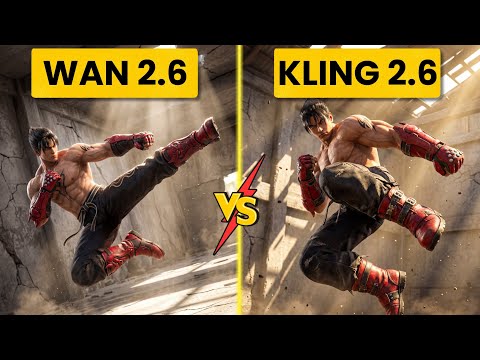 4:400:42Create fight scene from image with Wan 2.6The user uploads a Tekken 8 reference image and uses Wan 2.6 to animate a cinematic fight scene between two characters.Ai Chemy
 5:450:50Image-to-Video workflow in OpenArt to save creditsThe user demonstrates generating a high-quality image of a gold bar first using the 'Image Gen 4' model, then uploading that image to the VEO3 video generator to ensure visual consistency before animating the slice.unknown
 3:450:44Image-to-video with start frame in Veo 3.1The user uploads a starting frame image and a prompt to guide the Veo 3.1 model in generating a consistent 4K video sequence.Youri van Hofwegen
- 4:420:23Image-to-video with start frame in LTX 2.3The LTX 2.3 model is shown processing a starting frame image to generate a high-resolution video with slow-motion effects.Youri van Hofwegen
- 6:430:30Multi-image reference video generation with Veo 3.1The demonstration shows how to use a character sheet and an object reference image simultaneously in Veo 3.1 to maintain visual consistency.Youri van Hofwegen
- 8:090:45Reference image workflow with SeaDance 2.0The SeaDance 2.0 model is shown generating a 720p video using a character sheet, boxing glove reference, and a starting frame.Youri van Hofwegen
 31:141:10Sync motion from one video to anotherThe creator uses Motion Sync to apply the movements of a boxing video to a static cyberpunk character image.Wade McMaster - Creator Impact
 6:020:33Image-to-video generation with Vidu 3.1The user demonstrates how to use a previously generated image as a foundation for video, using the Vidu 3.1 model to animate specific motions.Roboverse
 6:580:43Animate images using Cling 3The creator demonstrates converting a still image into a 5-second video using the Cling 3 model within OpenArt's video interface.Isa does AI