Using Sora 2 via OpenArt interface

 OpenArt
Demo summary
The user demonstrates the OpenArt interface to select the Sora 2 model, adjust settings like 'fast model' and '8-second version', and generate a video from a text prompt.
Step-by-step
- Click on the text to video prompt
- Select Sora 2 from the model selection
- Enter your prompt into the text field
- Turn off autoenhance
- Select the Fast model option
- Choose the 8-second version
- Set the aspect ratio to Cinema
- Click on Create
Options
- Toggle autoenhance on or off
- Select between different video lengths (e.g., 8-second version)
- Choose the Fast model for generation
Tips
- Keep settings like aspect ratio consistent (e.g., Cinema) when performing a fair comparison between different models
Highlights
“if you want to create the same video with Sora 2 out of Open Art, that is super simple”
All demos from “Sora 2 vs Veo 3: 8 Same-Prompt Tests (Who Wins & Why)”
- 3:020:35Using Sora 2 via OpenArt interfaceCurrentThe user demonstrates the OpenArt interface to select the Sora 2 model, adjust settings like 'fast model' and '8-second version', and generate a video from a text prompt.OpenArt· Text to Video
- 13:380:20Local business ad generation with Veo 3Veo 3 is shown successfully using a reference image of real people to generate a promotional video for a gelato shop, including lip-synced dialogue.OpenArt· AI Commercial Generator
- Watch “Sora 2 vs Veo 3: 8 Same-Prompt Tests (Who Wins & Why)” →
Text to Video
 1:390:49Generate motion-heavy video with SeaDance 2.0The user demonstrates selecting SeaDance 2.0 in OpenArt and entering a prompt for a breakdancer in the rain to test fluid movement generation.Affiliation
- 2:490:11Compare motion generation with Kling 3.0The creator switches the model to Kling 3.0 using the same prompt to demonstrate how it handles complex physical movements.Affiliation
 20:392:03Generate video from text with Kling 3A demonstration of creating a cinematic space video from a text prompt using the Kling 3 model within OpenArt's video suite.Wade McMaster - Creator Impact
 0:511:27Generate AI video from text with Google V3 in OpenArtThe user selects the Google V3 model within OpenArt, applies the 'autoenhance' prompt feature, and generates a cinematic video of a person walking in the rain.Affiliation
 3:180:45Generate ASMR video from text with OpenArt and VEO3The creator navigates to OpenArt, selects the video creation tool, chooses the VEO3 model, and inputs a detailed prompt to generate a video of a yellow mango being sliced with synchronized audio.unknown
 0:500:50Generate realistic video with Sora 2The creator demonstrates using Sora 2 within the OpenArt interface to generate a high-resolution, 12-second video from a complex text prompt.Youri van Hofwegen
- 2:150:16Create vlog-style content with Sora 2A demonstration of Sora 2 generating a realistic 'vlog style' video of a winter day in New York City, showcasing environmental interpretation.Youri van Hofwegen
- 4:270:18Text-to-video generation with Kling 2.6The video shows the selection of the Kling 2.6 model in OpenArt to generate a video with saturated colors and integrated audio.Youri van Hofwegen
- 5:090:23Simulate cockpit environment with Kling 2.6A demonstration of Kling 2.6 generating a stylized video of a pilot in a thunderstorm, focusing on environmental effects and audio sync.Youri van Hofwegen
 1:191:38Text-to-video generation with Google VEO 3.1The creator demonstrates how to select the Google VEO 3.1 model within OpenArt, use the 'autoenhance' prompt feature, and generate a cinematic video of an astronaut.Thomas Creates
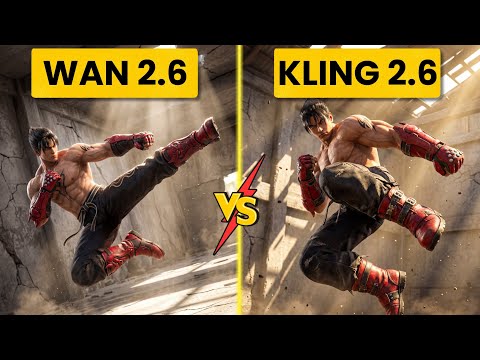 2:560:52Generate action video from text with Wan 2.6The user demonstrates selecting the Wan 2.6 model in Open Art and entering a prompt for a berserker knight smashing through a gate to generate a video with synchronized audio.Ai Chemy
 0:500:42Text-to-video generation with Veo 3.1The creator demonstrates generating an 8-second 4K video of a boxer using a text prompt and the Veo 3.1 model on OpenArt.Youri van Hofwegen