Text-to-video generation in OpenArt

 OpenArt
Demo summary
The creator demonstrates the text-to-video workflow by inputting a descriptive prompt of rugby players in a locker room to generate a scene from scratch.
Step-by-step
- Navigate to the Reference tab in OpenArt
- Select the regular prompting option
- Enter a descriptive prompt detailing the characters, setting, and actions
- Click generate to let the AI determine the visual outcome
Options
- Use Milshot instead of regular prompting
- Use start and end frames for more control
Watch out for
- The text-to-video settings are located under the Reference tab, which may be counterintuitive based on the naming
Tips
- Use regular prompting if you need to make something quick and don't have a specific visual idea
- Avoid using the regular prompting method if you need to maintain a consistent look across multiple different scenes
Highlights
“It might be confusing for you because it's quite weird names.”
All demos from “STOP Wasting Credits & Master Kling 3.0 in 25 Minutes”
- 1:201:09Configuring Kling 3.0 Multi-shot settingsThe creator demonstrates how to select the Kling 3.0 model and enable the multi-shot feature to customize up to six different shots within a single video generation.Kling AI· AI Movie Generator
- 3:321:08Generating consistent character angles with Multi-shotUsing a single image reference, the creator shows how to describe multiple camera angles and actions for a character to generate a consistent 12-second multi-scene video.Kling AI· Image to Video
- 7:060:58Text-to-video generation in OpenArtCurrentThe creator demonstrates the text-to-video workflow by inputting a descriptive prompt of rugby players in a locker room to generate a scene from scratch.OpenArt· Text to Video
- 9:382:18Using multiple visual references with Kling 3.0 OmniThe creator shows how to upload up to seven different image references (characters and locations) and tag them in the prompt to guide the AI's generation.Kling AI· AI Image Generator
- 15:001:06Image-to-video with start and end framesThe creator demonstrates the image-to-video method by setting a specific start frame and using multi-shot prompts to control the motion and narrative flow.Kling AI· Image to Video
- 17:150:29Extending video duration with Start/End frame interpolationThe creator shows how to use a start frame and a different end frame while sliding the duration bar to generate a longer, continuous video sequence.Kling AI· AI Video Extender
- Watch “STOP Wasting Credits & Master Kling 3.0 in 25 Minutes” →
Text to Video
 1:390:49Generate motion-heavy video with SeaDance 2.0The user demonstrates selecting SeaDance 2.0 in OpenArt and entering a prompt for a breakdancer in the rain to test fluid movement generation.Affiliation
- 2:490:11Compare motion generation with Kling 3.0The creator switches the model to Kling 3.0 using the same prompt to demonstrate how it handles complex physical movements.Affiliation
 20:392:03Generate video from text with Kling 3A demonstration of creating a cinematic space video from a text prompt using the Kling 3 model within OpenArt's video suite.Wade McMaster - Creator Impact
 0:511:27Generate AI video from text with Google V3 in OpenArtThe user selects the Google V3 model within OpenArt, applies the 'autoenhance' prompt feature, and generates a cinematic video of a person walking in the rain.Affiliation
 3:180:45Generate ASMR video from text with OpenArt and VEO3The creator navigates to OpenArt, selects the video creation tool, chooses the VEO3 model, and inputs a detailed prompt to generate a video of a yellow mango being sliced with synchronized audio.unknown
 0:500:50Generate realistic video with Sora 2The creator demonstrates using Sora 2 within the OpenArt interface to generate a high-resolution, 12-second video from a complex text prompt.Youri van Hofwegen
- 2:150:16Create vlog-style content with Sora 2A demonstration of Sora 2 generating a realistic 'vlog style' video of a winter day in New York City, showcasing environmental interpretation.Youri van Hofwegen
- 4:270:18Text-to-video generation with Kling 2.6The video shows the selection of the Kling 2.6 model in OpenArt to generate a video with saturated colors and integrated audio.Youri van Hofwegen
- 5:090:23Simulate cockpit environment with Kling 2.6A demonstration of Kling 2.6 generating a stylized video of a pilot in a thunderstorm, focusing on environmental effects and audio sync.Youri van Hofwegen
 1:191:38Text-to-video generation with Google VEO 3.1The creator demonstrates how to select the Google VEO 3.1 model within OpenArt, use the 'autoenhance' prompt feature, and generate a cinematic video of an astronaut.Thomas Creates
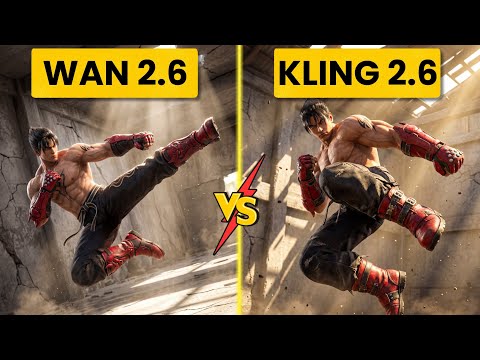 2:560:52Generate action video from text with Wan 2.6The user demonstrates selecting the Wan 2.6 model in Open Art and entering a prompt for a berserker knight smashing through a gate to generate a video with synchronized audio.Ai Chemy
 0:500:42Text-to-video generation with Veo 3.1The creator demonstrates generating an 8-second 4K video of a boxer using a text prompt and the Veo 3.1 model on OpenArt.Youri van Hofwegen