Fl Studio: Sidechain compression with Fruity Limiter
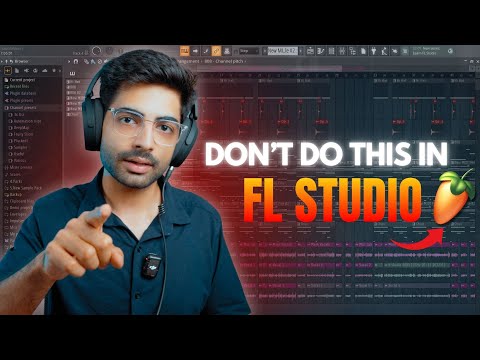
 Fl Studio
Demo summary
A step-by-step walkthrough of sidechaining a bass to a kick using Fruity Limiter, including setting the sidechain input, ratio, and threshold.
Step-by-step
- Add a Fruity Limiter to your bass track
- Switch the Fruity Limiter to Compressor mode
- Right-click the kick track on the mixer and select Sidechain to this track
- Go to the Limiter on the bass track and right-click the Sidechain selector to select the kick
- Increase the Ratio
- Increase the Attack slightly and decrease the Release
- Pull down the Threshold to trigger the ducking effect
Watch out for
- Do not select 'Sidechain to this track only' because the kick must remain linked to the Master track
Tips
- Increasing the Ratio will result in more aggressive ducking
All demos from “FL Studio for Beginners: Don’t Make These 10 Common Mistakes”
- 2:030:24EQing a kick drum in FL StudioThe user demonstrates searching for and cutting resonating frequencies on a kick drum sample using an EQ plugin.Fl Studio· AI Audio Editor
- 5:530:19Routing a reference track to headphones outputThe instructor shows how to unlink a reference track from the Master channel and route it directly to Output 1 and 2 to bypass mastering effects.Fl Studio· AI Mastering
- 11:390:47Sidechain compression with Fruity LimiterCurrentA step-by-step walkthrough of sidechaining a bass to a kick using Fruity Limiter, including setting the sidechain input, ratio, and threshold.Fl Studio· AI Audio Editor
- Watch “FL Studio for Beginners: Don’t Make These 10 Common Mistakes” →
AI Audio Editor
 3:090:11Adjust hi-hat length with the Out knobThe demonstration shows how to use the 'out' knob in the FL Studio sampler to shorten a hi-hat sample for a tighter sound.Dirkey
- 9:270:33EQing melody for 808 roomThe demonstration shows opening an EQ on the melody track and applying a low cut under 100Hz to prevent frequency clashing with the 808.Dirkey
- 10:092:17Leveling drum tracks in the mixerThe creator walks through the mixer, adjusting faders for the snare, hi-hats, and percussion to achieve a balanced drum mix.Dirkey
 2:000:42Time stretching samples in FL StudioThe creator demonstrates how to use the stretch mode in FL Studio to adjust the BPM of an AI-generated sample to fit a 91-93 BPM West Coast pocket.Busy Works Beats
- 22:500:47Automating high-pass and low-pass filtersThe creator demonstrates setting up a band-pass filter and right-clicking to create automation nodes to clear room for an 808 bass line.Busy Works Beats
- 27:560:39Slicing audio with Fruity SlicerThe creator demonstrates opening a sample in Fruity Slicer and slicing it by the beat to create a quantized stutter effect.Busy Works Beats
 0:090:37Create a volume automation clip in FL StudioThe narrator demonstrates selecting a region in the playlist, right-clicking a volume knob in the channel rack, and creating an automation clip to perform a fade-in.FL Studio
- 1:590:28Editing automation control pointsA walkthrough of UI actions in FL Studio including right-clicking to add/delete points, using shift-click to lock levels, and changing curve types.FL Studio
- 3:200:14Copy and paste automation statesThe user demonstrates copying a curve from one automation clip to another using the Articulator Tools menu.FL Studio
 7:020:32Processing AI vocals in FL StudioThe user demonstrates applying a gate, Soundgoodizer, EQ, reverb, and delay to the AI-generated vocal within FL Studio to finalize the track.Arcade
- 2:030:24EQing a kick drum in FL StudioThe user demonstrates searching for and cutting resonating frequencies on a kick drum sample using an EQ plugin.Basslila
- 11:390:47Sidechain compression with Fruity LimiterCurrentA step-by-step walkthrough of sidechaining a bass to a kick using Fruity Limiter, including setting the sidechain input, ratio, and threshold.Basslila