Animate images using Kling AI

 Kling AI
Demo summary
The video shows the process of uploading a generated image to Kling AI and applying an image-to-video prompt to create a 3D-style animation.
Step-by-step
- Open Kling AI and click on the upload image option
- Upload your generated image
- Paste your image-to-video prompt into the prompt field
- Edit the prompt text to remove unwanted elements or add camera movements like zooming in
- Select the model version (1.6 or 2.0)
- Click on Generate
Options
- Use Kling 1.6 for standard shots to save credits
- Use Kling 2.0 for better prompt adherence and fast motion movement
- Add specific camera movement instructions to the prompt
Watch out for
- AI-generated prompts may not be perfect and often require manual editing as a building block
Tips
- Start with Kling 1.6 for most shots as it uses fewer credits and often provides sufficient quality for 3D styles
- Reserve Kling 2.0 for scenes with fast motion to reduce artifacts and get smoother animation
- Use a GPT to generate initial image-to-video prompts to save time on brainstorming
Highlights
“it kind of makes the work much easier for you. You don't have to keep thinking, okay, what prompt do I have to use for this particular scene?”
All demos from “How to Create Full Animated Stories Using ChatGPT Images”
- 2:102:18Generate animation scripts and prompts with Animation Script Builder GPTThe creator demonstrates using his custom 'Animation Script Builder' GPT in ChatGPT to generate a character list, scene-by-scene shot list, and specific text-to-image and image-to-video prompts.ChatGPT· AI Storyboard Generator
- 4:432:49Generate consistent characters and scenes in ChatGPT-4oThe user demonstrates how to use ChatGPT-4o to generate consistent character reference images and scene shots based on the previously generated script prompts.ChatGPT· AI Person Generator
- 8:032:02Animate images using Kling AICurrentThe video shows the process of uploading a generated image to Kling AI and applying an image-to-video prompt to create a 3D-style animation.Kling AI· Image to Video
- 10:570:32Lip sync animation in Kling AIThe demonstration shows how to use the 'Lip Sync' feature in Kling AI by uploading a local audio file to match a character's mouth movements to the dialogue.Kling AI· AI Lip Sync Generator
- 12:171:01Animate and lip sync with Runway Gen-3 AlphaThe video shows the workflow in Runway ML for generating video from an image and using the lip sync action to align audio with the character's face.Runway· AI Lip Sync Generator
- 13:201:07Performance-driven animation with Runway Act OneThe creator demonstrates Runway's Act One tool, showing how a live camera recording of his own facial performance can drive the animation and expressions of a generated character.Runway· AI Animation Generator
- 15:130:28Assemble animated scenes in CapCutThe video demonstrates the final assembly of video clips, audio tracks, and sound design within the CapCut desktop video editor.CapCut· AI Video Editor
- Watch “How to Create Full Animated Stories Using ChatGPT Images” →



Image to Video
 7:291:18Animate transitions with Kling 2.1The creator demonstrates the image-to-video process using Kling 2.1, setting a start frame of a unicorn and an end frame of a hunter to create a seamless 10-second zooming transition.Dan Kieft
 15:090:34Keyframe transitions with Kling AIThe creator demonstrates uploading a starting illustration and an end photo into Kling AI to generate a seamless transition between two frames.Tao Prompts
 7:551:21Convert images to video with Kling AIThe demonstration shows uploading a static image of an owl and using a text prompt to animate it into a slow-motion flight sequence.Jason Gandy
 2:200:36Animate a reference image with Kling 3.0The narrator demonstrates image-to-video by uploading a reference image of a man and entering a prompt for him to walk towards a dragon using the Kling 3.0 model.Tao Prompts
 7:080:29Animate images with Kling AI and sound effectsThe user demonstrates uploading an image to Kling AI, pasting an animation prompt, and checking the box for built-in sound effects to generate a final ASMR clip.Monetize with AI
 4:030:39Animate scenes with Kling 2.6The video shows the process of using the 'image to video' feature, uploading a panel as a start frame, and applying a camera movement prompt using the Kling 2.6 model.Mira AI
 2:471:07Animate images into ASMR videos with Kling AIThe user demonstrates uploading an image to Kling AI, using the Deep Seek tool to refine the prompt, and generating a video with synchronized AI sound.AI Century
 10:041:33Animate images using Kling and KlingThe video shows how to take a generated image into the video tab, select a model like Kling, and use ChatGPT-generated video prompts to create a 5-10 second cinematic clip.Dan Kieft
 6:580:58Generate video with Kling 3 Omni using referencesThe user demonstrates using Kling 3 Omni's 'Text with reference' and 'multi shot' features, uploading the previously created 3D world images as visual guides for video generation.AI Video School
 3:321:08Generating consistent character angles with Multi-shotUsing a single image reference, the creator shows how to describe multiple camera angles and actions for a character to generate a consistent 12-second multi-scene video.Dan Kieft
- 15:001:06Image-to-video with start and end framesThe creator demonstrates the image-to-video method by setting a specific start frame and using multi-shot prompts to control the motion and narrative flow.Dan Kieft
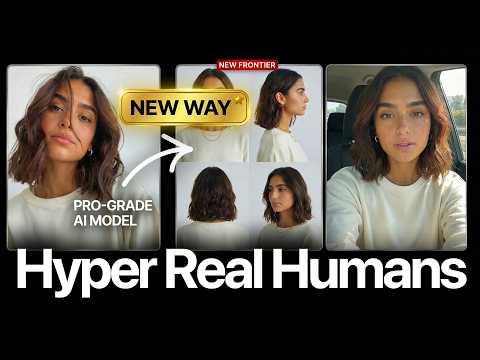 17:020:28Motion transfer with Kling AIThe creator shows how to use Kling Motion Transfer to map the movements from a real 'driving video' of himself onto a static AI influencer image.Sirio