Keyframe transitions with Kling AI

 Kling AI
Demo summary
The creator demonstrates uploading a starting illustration and an end photo into Kling AI to generate a seamless transition between two frames.
Step-by-step
- Open Kling AI
- Upload the starting frame image
- Upload the end frame image
- Click Generate
Highlights
“I think this turned out absolutely stunning”
All demos from “The 5 Levels of Creating AI Videos (and How to Level Up)”
- 0:400:16Text-to-video generation with Google VEOThe creator demonstrates entering a text prompt into Google VEO 3 to generate a scene of a stormtrooper in action.Google Vids· Text to Video
- 2:040:35Image-to-video animation with Google VEOThe user uploads a personal photo to Google VEO, adjusts settings to 'frames to video', and provides a prompt to animate himself vlogging.Google Vids· Image to Video
- 4:541:21Character consistency with Nano BananaThe creator demonstrates uploading a character reference image into Nano Banana on the Higsfield platform and using a descriptive prompt to place the character in a sci-fi cockpit.Higsfield· AI Person Generator
- 8:410:47Style referencing in MidjourneyThe user demonstrates dragging an image into the Midjourney prompt bar to use as a style reference for generating a consistent polar bear scene.Midjourney· Image to Image
- 15:090:34Keyframe transitions with Kling AICurrentThe creator demonstrates uploading a starting illustration and an end photo into Kling AI to generate a seamless transition between two frames.Kling AI· Image to Video
- 16:240:40Motion capture with Runway Act-OneThe user demonstrates the 'Act-One' feature in Runway, uploading a video of himself to map his facial expressions and movements onto a 3D goblin character.Runway· AI Animation Generator
- 18:310:27Video upscaling with Topaz AIThe creator shows the process of uploading an AI-generated video into Topaz AI and selecting 4K output to enhance resolution and detail.Topaz Video AI· AI Video Upscaler
- Watch “The 5 Levels of Creating AI Videos (and How to Level Up)” →



Image to Video
 7:291:18Animate transitions with Kling 2.1The creator demonstrates the image-to-video process using Kling 2.1, setting a start frame of a unicorn and an end frame of a hunter to create a seamless 10-second zooming transition.Dan Kieft
- 15:090:34Keyframe transitions with Kling AICurrentThe creator demonstrates uploading a starting illustration and an end photo into Kling AI to generate a seamless transition between two frames.Tao Prompts
 7:551:21Convert images to video with Kling AIThe demonstration shows uploading a static image of an owl and using a text prompt to animate it into a slow-motion flight sequence.Jason Gandy
 2:200:36Animate a reference image with Kling 3.0The narrator demonstrates image-to-video by uploading a reference image of a man and entering a prompt for him to walk towards a dragon using the Kling 3.0 model.Tao Prompts
 7:080:29Animate images with Kling AI and sound effectsThe user demonstrates uploading an image to Kling AI, pasting an animation prompt, and checking the box for built-in sound effects to generate a final ASMR clip.Monetize with AI
 4:030:39Animate scenes with Kling 2.6The video shows the process of using the 'image to video' feature, uploading a panel as a start frame, and applying a camera movement prompt using the Kling 2.6 model.Mira AI
 2:471:07Animate images into ASMR videos with Kling AIThe user demonstrates uploading an image to Kling AI, using the Deep Seek tool to refine the prompt, and generating a video with synchronized AI sound.AI Century
 10:041:33Animate images using Kling and KlingThe video shows how to take a generated image into the video tab, select a model like Kling, and use ChatGPT-generated video prompts to create a 5-10 second cinematic clip.Dan Kieft
 6:580:58Generate video with Kling 3 Omni using referencesThe user demonstrates using Kling 3 Omni's 'Text with reference' and 'multi shot' features, uploading the previously created 3D world images as visual guides for video generation.AI Video School
 3:321:08Generating consistent character angles with Multi-shotUsing a single image reference, the creator shows how to describe multiple camera angles and actions for a character to generate a consistent 12-second multi-scene video.Dan Kieft
- 15:001:06Image-to-video with start and end framesThe creator demonstrates the image-to-video method by setting a specific start frame and using multi-shot prompts to control the motion and narrative flow.Dan Kieft
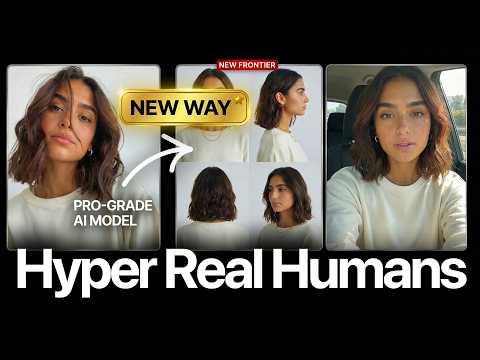 17:020:28Motion transfer with Kling AIThe creator shows how to use Kling Motion Transfer to map the movements from a real 'driving video' of himself onto a static AI influencer image.Sirio