Motion transfer with Kling AI
 Kling AI
Demo summary
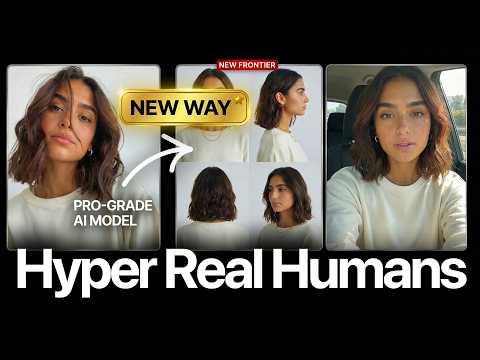
The creator shows how to use Kling Motion Transfer to map the movements from a real 'driving video' of himself onto a static AI influencer image.
Step-by-step
- Navigate to the Tools menu
- Select Motion Control
- Upload the driving video containing the desired movement
- Upload the static AI avatar image
- Click Generate
Highlights
“this is very cool. Look at this... It's crazy.”
All demos from “She Isn't Real (The ULTIMATE Al Influencer Tutorial)”
- 2:160:36Generate realistic AI influencer images with Kora RealityThe creator demonstrates using Kora Reality within the Enhancor platform to generate a hyper-realistic image of an influencer using a JSON-structured text prompt.Kora Reality· AI Realistic Image Generator
- 2:521:04Copy image style with Kora Reality and Qwen 2-VLThe demo shows how to upload a reference photo from Pinterest to Kora Reality, which uses Qwen 2-VL to analyze and replicate the style for a new AI generation.Kora Reality· AI Style Transfer
- 7:580:22Upscale images to 4K using Crisp UpscalerThe video shows the process of uploading an image to the Enhancor upscale tab and using the Crisp Upscaler to increase resolution and sharpness.Enhancor· AI Image Upscaler
- 8:500:32Fix skin texture with Enhancor V4 UpscalerThe creator demonstrates the Enhancor V4 model, which specifically targets skin pores and micro-textures to make AI-generated faces look more human.Enhancor· AI Image/Photo Enhancer
- 10:041:15Create consistent characters with Nano Banana 2The demo shows how to use Nano Banana 2 to place a consistent AI character into a new scene with specific props (AG1 bottle) and outfits (Lululemon) using image references.Kora Reality· AI Person Generator
- 13:580:44Generate iPhone-style video with Enhancor V4 VideoThe creator demonstrates turning a static image into a handheld-style 'selfie' video using the Enhancor V4 video generator model.Enhancor· Image to Video
- 17:020:28Motion transfer with Kling AICurrentThe creator shows how to use Kling Motion Transfer to map the movements from a real 'driving video' of himself onto a static AI influencer image.Kling AI· Image to Video
- Watch “She Isn't Real (The ULTIMATE Al Influencer Tutorial)” →

Image to Video
 7:291:18Animate transitions with Kling 2.1The creator demonstrates the image-to-video process using Kling 2.1, setting a start frame of a unicorn and an end frame of a hunter to create a seamless 10-second zooming transition.Dan Kieft
 15:090:34Keyframe transitions with Kling AIThe creator demonstrates uploading a starting illustration and an end photo into Kling AI to generate a seamless transition between two frames.Tao Prompts
 7:551:21Convert images to video with Kling AIThe demonstration shows uploading a static image of an owl and using a text prompt to animate it into a slow-motion flight sequence.Jason Gandy
 2:200:36Animate a reference image with Kling 3.0The narrator demonstrates image-to-video by uploading a reference image of a man and entering a prompt for him to walk towards a dragon using the Kling 3.0 model.Tao Prompts
 7:080:29Animate images with Kling AI and sound effectsThe user demonstrates uploading an image to Kling AI, pasting an animation prompt, and checking the box for built-in sound effects to generate a final ASMR clip.Monetize with AI
 4:030:39Animate scenes with Kling 2.6The video shows the process of using the 'image to video' feature, uploading a panel as a start frame, and applying a camera movement prompt using the Kling 2.6 model.Mira AI
 2:471:07Animate images into ASMR videos with Kling AIThe user demonstrates uploading an image to Kling AI, using the Deep Seek tool to refine the prompt, and generating a video with synchronized AI sound.AI Century
 10:041:33Animate images using Kling and KlingThe video shows how to take a generated image into the video tab, select a model like Kling, and use ChatGPT-generated video prompts to create a 5-10 second cinematic clip.Dan Kieft
 6:580:58Generate video with Kling 3 Omni using referencesThe user demonstrates using Kling 3 Omni's 'Text with reference' and 'multi shot' features, uploading the previously created 3D world images as visual guides for video generation.AI Video School
 3:321:08Generating consistent character angles with Multi-shotUsing a single image reference, the creator shows how to describe multiple camera angles and actions for a character to generate a consistent 12-second multi-scene video.Dan Kieft
- 15:001:06Image-to-video with start and end framesThe creator demonstrates the image-to-video method by setting a specific start frame and using multi-shot prompts to control the motion and narrative flow.Dan Kieft
- 17:020:28Motion transfer with Kling AICurrentThe creator shows how to use Kling Motion Transfer to map the movements from a real 'driving video' of himself onto a static AI influencer image.Sirio