Assemble cartoon assets in CapCut
 CapCut
Demo summary
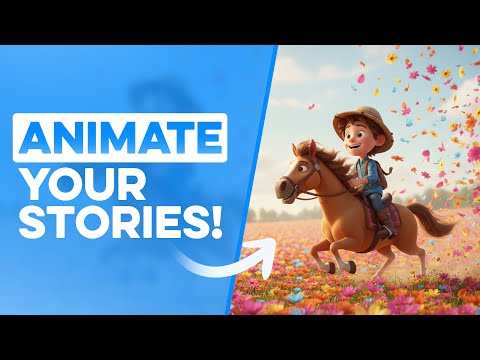
The creator briefly shows the process of dragging the generated video and audio assets into CapCut to sync them for the final edit.
Step-by-step
- Open a new project in CapCut
- Drag all generated video and audio assets into the editor
- Arrange the video clips in the correct sequence
- Add the generated narration track
- Sync the video clips to the audio
- Export the final video
All demos from “How to Make Cartoon Videos with AI (Full Tutorial)”
- 3:091:53Create consistent characters in OpenArtThe user demonstrates the 'Characters' feature in OpenArt, using text descriptions and the 'Pixar style' setting to generate consistent squirrel and fox characters.OpenArt· AI Person Generator
- 5:052:09Generate scene images with multiple characters in OpenArtThe video shows how to use the OpenArt workflow to place two previously created characters into a single generated scene image using specific character prompts.OpenArt· AI Image Generator
- 7:141:34Animate images using Kling 2.5 in OpenArtThe creator demonstrates converting static images into video clips using the Kling 2.5 model within the OpenArt platform.OpenArt· Image to Video
- 11:060:13Assemble cartoon assets in CapCutCurrentThe creator briefly shows the process of dragging the generated video and audio assets into CapCut to sync them for the final edit.CapCut· AI Video Editor
- Watch “How to Make Cartoon Videos with AI (Full Tutorial)” →
AI Video Editor
 0:261:06Basic cutting and J-cuts in CapCutThe creator demonstrates how to perform a basic cut using shortcuts S and Q to remove silences, followed by extracting audio to create J-cuts for smoother transitions.Patrik Key
- 1:370:37Centering subjects with eye-level guidesThe demo shows how to use a template asset to align the subject's face to a specific eye-level line and then batch-apply scale and position settings to multiple clips.Patrik Key
- 2:144:40Creating smooth zooms with keyframes and graph editorThe creator walks through setting transform keyframes and using the variable speed animation (graph editor) with 'Shift+W' to create smooth, synchronized zoom-ins and zoom-outs.Patrik Key
- 6:580:49Adding a background mask for text readabilityA demonstration of creating a compound clip with a split mask and feathering to create a subtle dark gradient that makes overlay text pop.Patrik Key
- 7:474:27Designing stylized animated captionsThe tutorial shows how to style text with the Tactic Sans font, animate it sliding from opposite directions, and add a 'shine' effect using film strip masks and keyframes.Patrik Key
- 12:223:04Animating logos and icons with auto-removalThe creator uses CapCut's auto-removal tool to isolate a logo and demonstrates animating icons with scale and rotation keyframes to create a pop-in effect.Patrik Key
- 37:200:15Applying AI Relight to footageThe creator demonstrates using the CapCut 'Relight' feature under the ambient settings to add a teal backlight to the video subject.Patrik Key
- 37:523:09Final touch-ups: Blur, Shake, and Motion BlurThe final demo shows how to add professional polish using keyframed blur transitions, camera shakes, and motion blur on moving assets.Patrik Key
 9:521:22Removing Arena AI watermarks in CapCutThe creator shows how to import the generated clips into CapCut and trim the end of the videos to remove the Arena AI logo and intro frames.HappychyAi
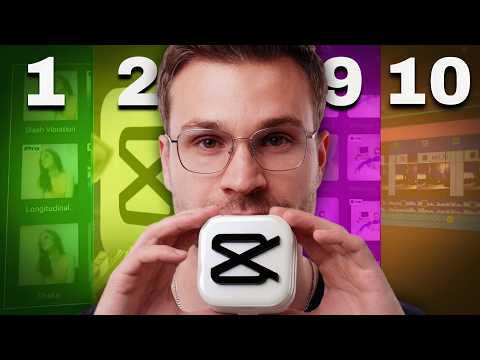 0:320:34Set aspect ratio in CapCutThe creator demonstrates how to modify the timeline settings in CapCut to choose between 16:9 for YouTube or 9:16 for vertical social media content.Matt Loui
- 2:040:33Trim boring parts and camera setupThe video shows how to identify and crop out verbal filler and 'camera ums' (setup time) by trimming the beginning of clips on the timeline.Matt Loui
- 6:060:30Automatic beat detection for musicThe video demonstrates using CapCut's 'Auto-mark beats' feature to generate markers on a music track for precise rhythmic editing.Matt Loui